A little bit about organizing
10 min read
A few years ago I was pleased to be the first presenter at a “Ladies’ Enrichment Series” at our local library. My topic was “Organizing your Home and life”.
A Little Bit About Organizing
A few years ago, I was pleased to be the first presenter at a “Ladies’ Enrichment Series” at our local library. My topic was “Organizing your Home and life”. I thought you might like to see my outline (of course, you’ll miss my jokes and funny faces, but you’ll get the gist of the presentation). Let me know if you have any specific questions about organizing – maybe I can help you!
ORGANIZING
Organizing has several different “categories” or reasons:
• want things to be organized to look nice
• more stuff than space, and need to organize it well to have room for it all
• lots of space and lots of stuff but can never find anything
LIFE
• Use a master calendar and mark all appointments on it. If you have a smart phone, make sure to input all appointments into your phone. That way you will not double-book yourself. Families can use a physical calendar or a Google calendar to be able to see what everyone is doing.
• A place for everything and everything in its place. If you always put your keys in the same place, you will never have to look for them! (hint – hang from a ring on your purse with a karabiner)
• If you notice a rip in a piece of clothing, set it aside to be repaired before you launder it, so it doesn’t get worse.
• Treat stains right away with Stain Stick – it starts working on the stain before you launder the garment.
If you have too much stuff
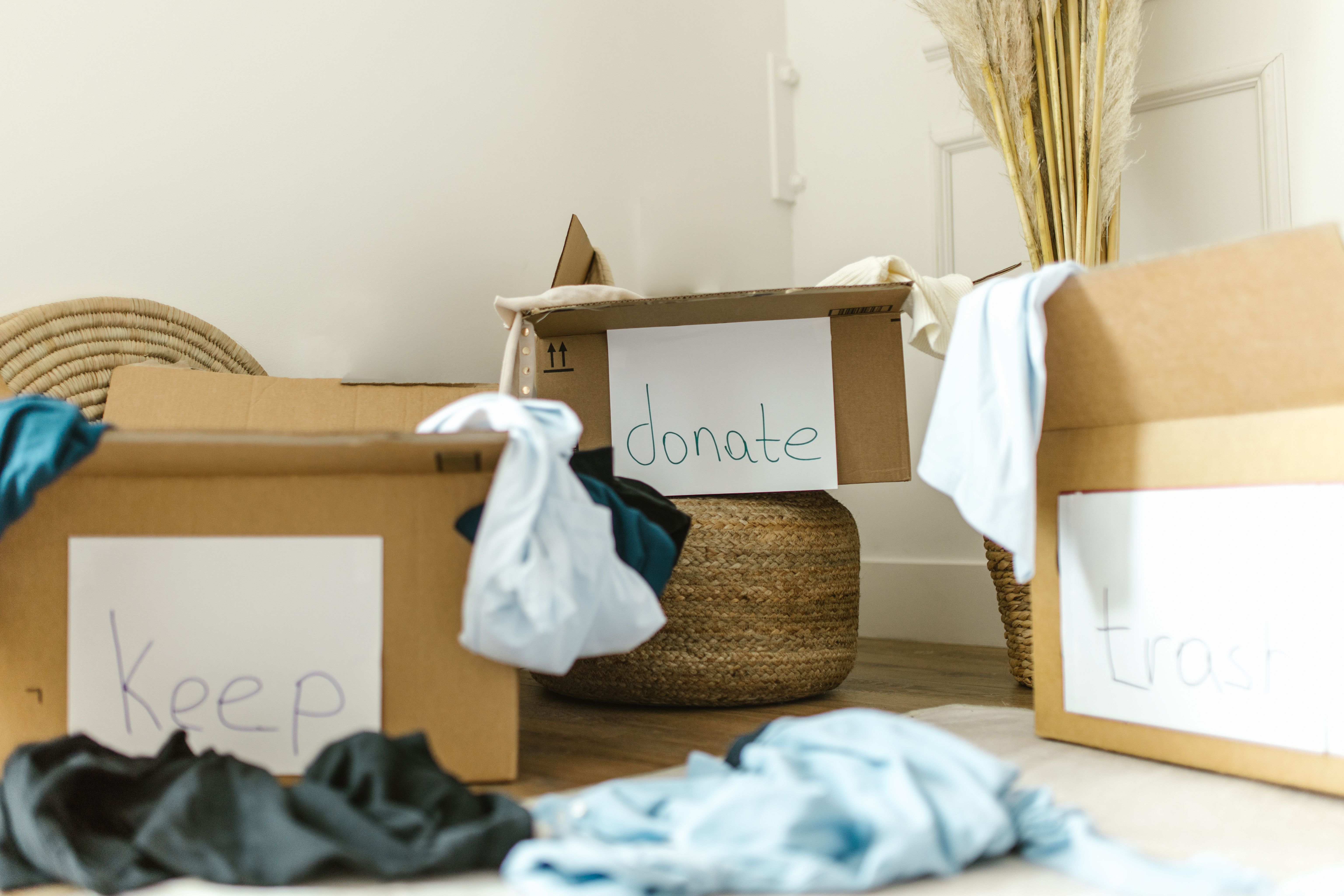
- Take 10-15 minutes a day and go through one drawer, one cabinet, one shelf. Have a box with you for any items you no longer need. Make a plan to donate these items.
- If you find things that are broken or don’t work, throw them away. o For every new item that enters the house, at least one item must leave (has to belong to the same person – you can’t buy new shoes and throw out a pair of your husband’s!)
- Do I use it? Do I love it?
- For items with sentimental meaning – find a way to display it. Or, take a picture of it and put it in an album or on the wall to enjoy.
GENERAL TIPS • When space is at a premium, build UP! • Two words – Command hooks! They can hold calendars, purses, picture frames, scarves; whatever! • Make a command center – a big calendar with everyone’s activities on it. A bulletin board for invitations, notices, etc. Give each child a clip for their things. • Set a timer, work for 10 minutes (or 15, or 20 – whatever is reasonable to you). Keep a trash bag and a donation bag with you. • Keep a Donation Box in your basement, garage, somewhere. Whenever you come across things you don’t really care about or use anymore, put them in the box, then donate them. • Over-the-door shoe organizers (SHOW ONE) are great in many rooms. • A collection of things (whatever they are) usually looks best when displayed together, rather than scattered everywhere.
KITCHEN • Make “stations” – so all baking items are together, all pots & pans are together, all cooking utensils are together • Put things with the other things you use them with; example – put coffee mugs and coffee above the coffee pot • Wipe up spills when they happen (both on counters and on floors) – it will keep them from getting crusty or staining and therefore requiring more work to get them out • Put organizer trays under your kitchen sink and put the most often used items in the front and the least often used items in the back. Make sure you put each item away in the same place you took it from. • Keep counters as clear as possible – lots of items on the counter add to a messy look • Type up a list of commonly purchased food & other items. Print out a few and put them on a clipboard hanging in your pantry or on the back of a cabinet door. Use a highlighter to indicate items that need to be purchased. Train your family to highlight the item when they use the last one. • Refrigerator
- Clean it out regularly to get rid of expired products & to wipe up spills
- Designate spots for things – always put your milk, your butter, your eggs in the same spot
- For things stored on the door, group them – all salad dressings together, all condiments together, etc.
- If you save leftovers, use them! Otherwise, freeze them or don’t save them at all.
•Pantry
- if you have deep shelves, use bins to hold each type of item (ex. “pasta”, “chips”, “snacks”, etc.).
- Keep all like items together – for example, if you just put canned goods anywhere there is a space, you will never know how many cans of beans you have – and you will continue to buy more
- Shorter things in front; taller things in back o Seldom used items should go on bottom or top shelves, out of the way. Even better, move them to another area if possible. You don’t want to have to move the roasting pan that you use once a year every time you make dinner!
• Shoe organizer on back of pantry door – for spices, packets, cake decorating stuff, etc.
BATHROOM • Keep counters as clear as possible – lots of items on the counter add to a messy look. If there are small items that need to be on the counter, put them on a tray to “corral” them • Do not keep medicine in medicine cabinet! Should be kept somewhere where heat & humidity are not an issue • A picnic silverware caddy makes a great holder for hair dryer, hair spray, brush, etc. • Use a squeegee on the shower walls & doors after you shower – less water means less chance of mildew. • Use drawer organizers (so everything has a place) in shallow drawers and boxes or bins in deeper drawers. You don’t want things falling over and mixing all together – then you have to take time to straighten them out! • Wipe counters and sinks with a cleaning wipe or paper towel in between cleanings – they will stay clean longer. • Shoe organizer on back of door – for nail polish, extra shampoos and other supplies, etc.
LIVING ROOM/DINING ROOM • If you declare a spot that the remote is to live, and have everyone return it to that spot when they are done, you won’t lose the remote anymore! • A basket of magazines looks better than a stack of magazines. Same for throws, etc. Try to corral things. • It’s easier to put everything back the way you want it before you leave the room than to have to come back later and fix it then. • Choose furniture that has drawers or cubbies for baskets so that things can be put away.
OFFICE/STUDY • Attach Command Hooks to inside of desk to hang cords on • Again, build up! • Figure out a system and use it. Multiple in-baskets? Folders in drawers? File holders that hang on the wall? • Organize your work space so it works for you. Left or right-handed? Do you like things on top of the desk or put away?
KIDS ROOM • Toy boxes, bins and baskets are generally hard for children to manage; shelves are much easier (use smaller bins on the shelves) • Label bins with photos of the type of toy that goes in the bin (or use words if children are old enough to read) • Kids toys – new one in, old one out! • Hardware organizer drawers are great for organizing little things like barrettes, hair ties, jewelry, etc. Label each drawer • Install a lower rod so that they can take down or hang up their own clothes • Teach them to make the bed every day – that always makes a room look neater! • Little kid puzzles – give each puzzle a number and write that number on the back of each piece. That way you’ll know which puzzle each piece belongs to • Washable toys can usually be run through the dishwasher (by themselves, not with dirty dishes) to sterilize them. This will save a lot of sniffles! • Give school age kids a place for their backpacks – ours each had a big bin in our kitchen. When they came home, the backpack went in the bin. Also put Show & Tell items, papers to be returned to the teacher, etc. • A large family bulletin board also helps when you have school-age kids. Each person gets a clip on the bulletin board to hang their stuff. Flyers about upcoming events, papers that need to be returned, upcoming itineraries, etc. • Shoe organizer on back of door can hold small toys, hair bows, barrettes & clips, socks & underwear so they can dress themselves.
BEDROOM • Make your bed! The room will look 100% better if the bed is made. • Put laundry away as soon as you bring it into the room. • Utilize under the bed boxes to store out of season clothes, extra linens, things you don’t need often.
GARAGE • Shelves are a great way to organize things in a garage • Use the organizers with the little drawers to organize small things like picture-hanging wire and hooks, nails, screws, etc. • Clean up oil leaks when they happen. Lestoil is great for this, but needs to be rinsed well because it has a strong smell. • The garage is a great place to keep your donations box. Whenever it’s full, stick it in the car and take it to donate. • Great goal – to be able to park your car/s in the garage!
GIFT WRAP • Designate one place for all gift wrapping items. I have a bureau (used to have a big kitchen drawer) – one drawer has gift bags & tissue, one has rolls of paper (have to buy the short ones) and top drawer has shoe boxes to organize ribbons, bows, gift tags, tulle ribbon, etc.
- Also have scissors & scotch tape in the same area so gifts can be wrapped right there.
MOVING
- When preparing to move, clean house first – don’t move things that are broken, or that you don’t want anymore.
- Do you have a box of stuff that has moved with you several times and you still haven’t unpacked it? Think about whether you really need it or not. If you do, unpack it and use or display it. If not, get rid of it.
- Use similar sized boxes so that they stack easily.
- Don’t write location or contents on the box itself. Use paper or labels to indicate the room and contents. I use strips of paper that go half on the top and half on the side of the box. Each room has a color, so no one has to ask where the box goes. Hang the colored strip from the doorways to each room and people can just look for the color. Write the contents on the strip also. When the move is done, remove the strip and the box can be reused.
- Heavy stuff in small boxes, light stuff in big boxes. Wrap fragile things well in paper or bubble wrap or in extra towels and sheets.
CLUTTER (tips from Peter Walsh) • #1. Stop pushing it off.
• #2. Start small.
• #3. It’s time to get real with your adult kids.
• #4. Stop feeling like you’re throwing money down the drain by donating your stuff.
• #5. Don’t let junk mail even enter your home.
• #6. Don’t obsess over keeping everything “milestone” project your child creates.
• #7. Don’t hold on to clutter from parents who have fallen asleep (died).
• #8. Don’t feel emotionally blocked when it comes to getting rid of things that belonged to loved ones who have died.
• #9. Don’t let baby and kid clutter ruin your space.
• #10. Don’t get bogged down with digital photos.
• #11. Follow this simple rule – You have to put things back where they belong. If you can get things out, you can put them back.
• #12. Don’t say you’re too busy to declutter.
• #13. Understand a totally organized home won’t appear overnight. (But start this trash bag tango today.)
• #14. Know your clutter could the result of something bad that happened to you. Clutter is often about “something else.” That something is often loss, grief, trauma, abuse, self-image, or something else. Turn to counseling and meditation to help ease your mind.
I hope you find something in this post that will help you with your organizing challenges. Let me know if you need help!